
The ABC of THAMES
As ABC draws to a close in 1968, MD Howard Thomas looks to the future
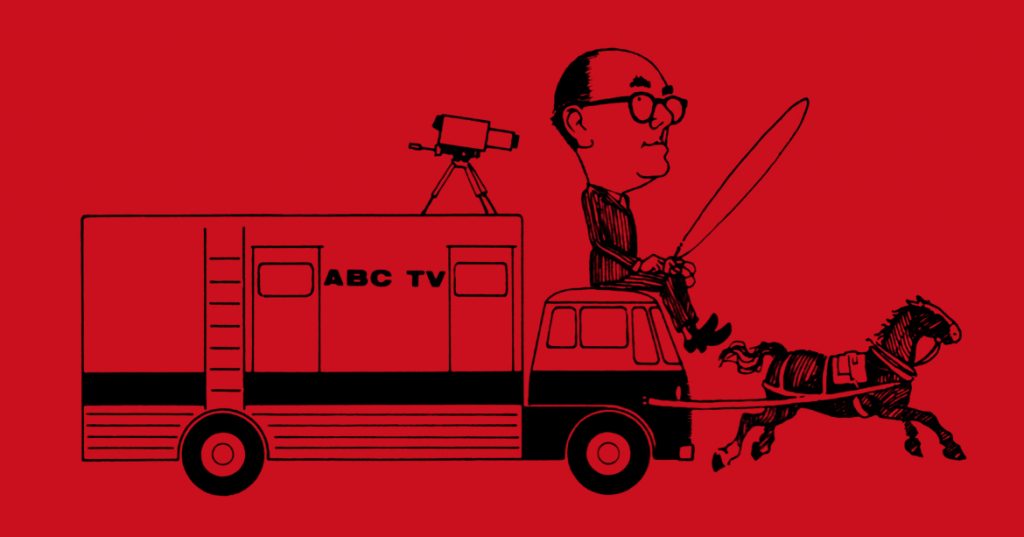

As long ago as December, 1966, when the Independent Television Authority announced that the North and Midlands would no longer be split into weekday – weekend contracts, we have lived with the fact that ABC’s “odd man out” contract would cease to exist.
From that moment we knew that a new Company would have to take over from ABC, either as a 7-day contractor in Lancashire, Yorkshire or the Midlands, or to share the London contract. Therefore, among ourselves, we began to talk not about ABC Television but about the new Company “XYZ Television”.
“XYZ” has become Thames Television, operating what the Authority calls “the prime contract” in London, with ABC interests having the major (marginally) interest in Thames.
Change was inevitable. And change there has been in 1968 – not only in terms of Independent Television, but in terms of the whole country, in its politics and its economy.
ABC, as we have all known it, was already spread-eagled over England, stretched over many centres. Now, geography has played its part in the history of the Company, with the result that one quarter of our staff has had to be hived off away from the Company, and transported over the Pennines into Yorkshire.
Most of the remaining ABC men and women have been able to stay put at Teddington, augmented by Rediffusion technicians from Wembley, whilst a small group of ABC pioneers has camped in Television House, Kingsway, en route for the new Thames Colour Centre in Euston Road (still handy for sentimental journeys to Manchester).
“Plus ça change, plus c’est la même chose.”
(The more things change, the more they are the same.)
Everything is changed – but the objectives of us all remain as they were, to give the public the finest programmes and the best programme service. Like every other Company in Independent Television, ABC has had its vicissitudes, but very few among us have ever lost sight of the fact that we all work for the public and, with rare exceptions over 12 years, contentious issues have been set aside so that services to viewers should continue.
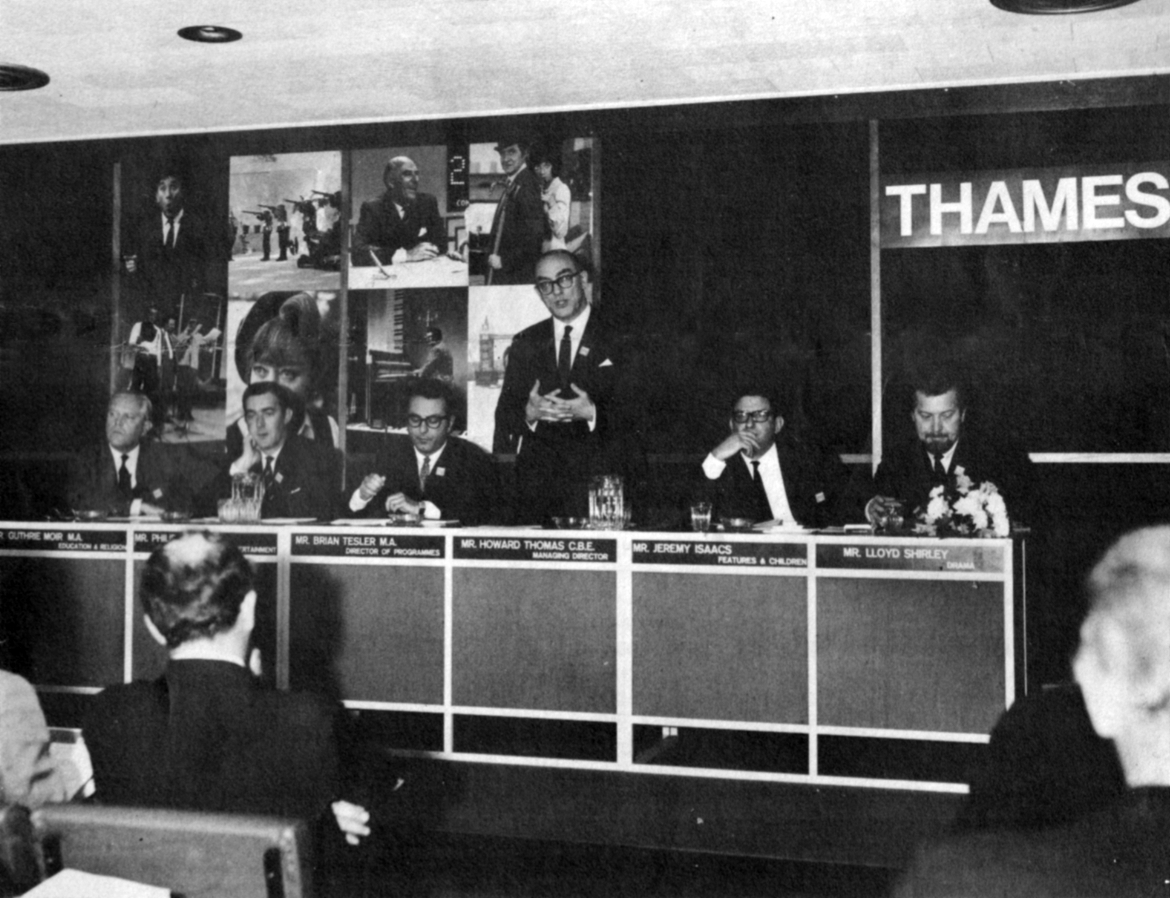
What now?
A new chapter; not again the early struggling years of ABC with new, untrained staff, learning as they went along. Now, skilled and seasoned veterans, with hundreds of programmes under their belts, go forth with the new Companies. They have learned the ways, mastered their jobs and become the professionals of television. In Yorkshire, the ABC contingent must inevitably form the nucleus of the new Company, for every new army, however brilliantly led, depends upon its élite of battle-hardened warriors.
In London, two all-star teams will be merged into one, rather like a combination of Manchester City and Manchester United. The expert technicians of Teddington will join forces with equally expert operators from Wembley. The veterans of Television House will be rejuvenated with some top talent from ABC.
On the programme side, there has been the opportunity to select the best of two really expert and international teams. The policy in building Thames Programme Department has been to retain whole departments rather than to select individuals. A starry combination it makes – with ABC’s Drama Department, unchallengeably the best in ITV, and ABC’s Light Entertainment Department which has gradually seized the crown from ATV, plus Rediffusion’s eminent Current Affairs and Children’s Departments, and the pioneering Schools Department. The Outside Broadcast Department consists of Rediffusion’s men and ABC’s equipment.
All this has the makings of a great company and its leaders are men who have worked successfully together, each in his own right a key figure in the Television industry.
Although the new regime will mean a splitting of ABC personnel, their work will often be screened side-by-side, for under the new networking system, many of Yorkshire’s programmes will be transmitted in London, while Yorkshire will be taking a high proportion of Thames’ output. The accord at top level between the two companies is very healthy, and there has been the closest collaboration with Ward Thomas, the Managing Director of Yorkshire, and his Programme Controller, Donald Baverstock. This is all reflected in the successful negotiations which have preceded the preparations for going on the air at the end of July.
Changes, splits, divisions, yes – but the one common link is ITV, and working for this same cause, the comradeship, team spirit and goodwill of ABC will endure into Yorkshire and into Thames. For the moment, the ways must part on August 1 but, long term, the deep, long-lived time-tested associations between all who have made ABC will continue and survive.
To some, therefore, we say “Goodbye for now”; but only for now.

About the author
Howard Thomas (1909-1986) was a writer, producer and television executive. He was managing director of ABC Television throughout its existence and held the same post at Thames Television until the early 1980s. His autobiography, 'With an Independent Air: Encounters during a lifetime of broadcasting' was published by Weidenfeld and Nicolson in 1977.


